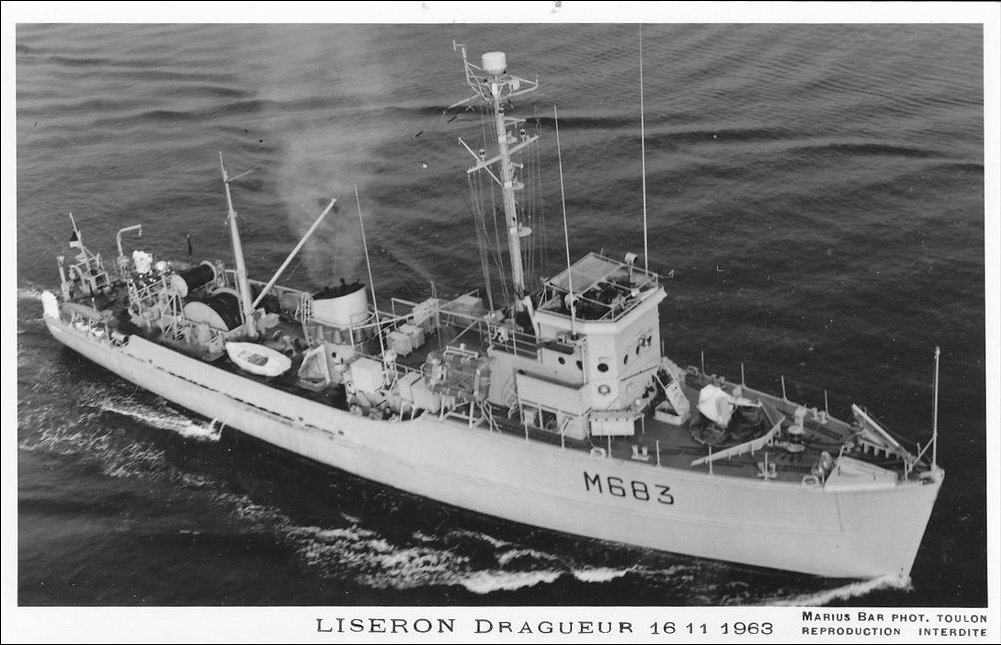
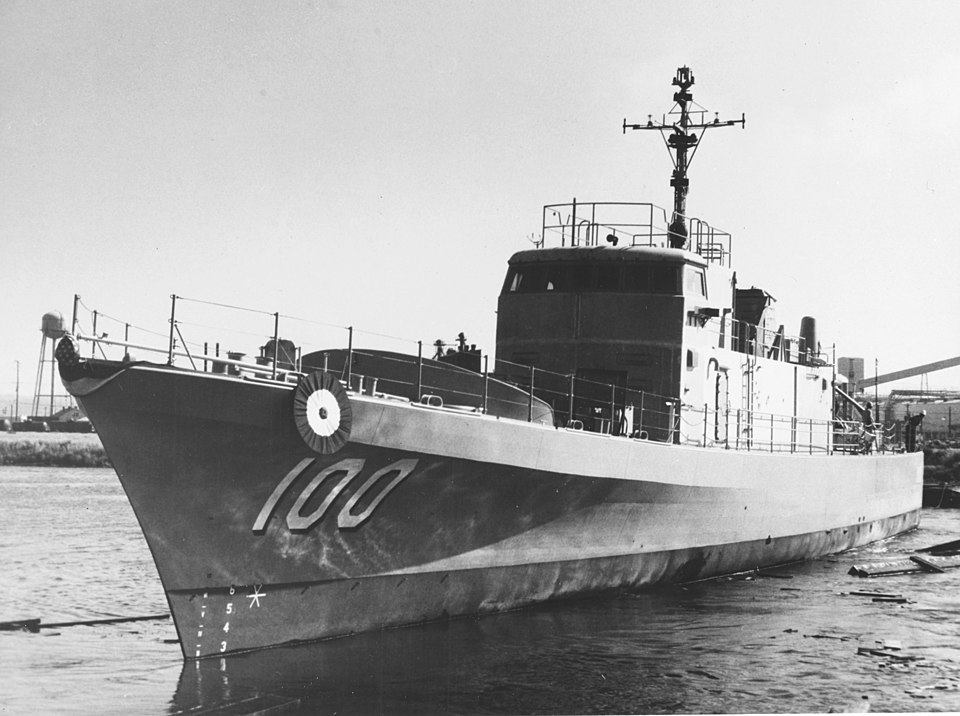
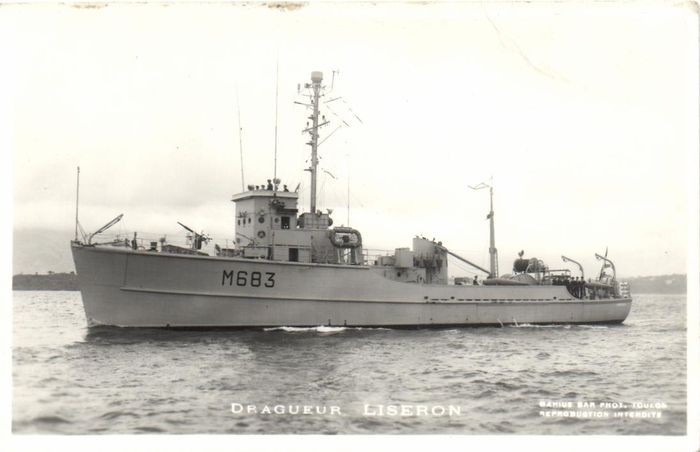
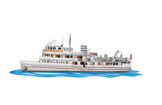
Laid down in 1953 at Tacoma Boatbuilding in Tacoma, Washington, the motor vessel LISERON was one of seven Adjutant-class motor minesweepers constructed for the French Navy under the auspices of the U.S. Navy’s Military Defense Assistance Pact. She was completed on June 23, 1954 as USS AMS-98, an enlarged and modernized evolution of the earlier YMS-type minesweepers developed during  World War II.

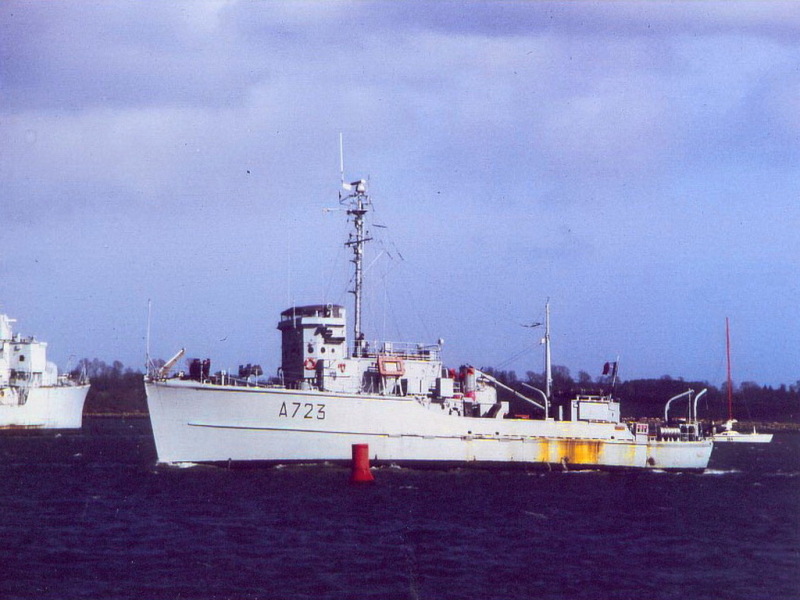
Above: Photo by Marius Bar, Toulon, France

Tacoma Boat Building Company

Tacoma Boatbuilding Company was a shipyard at 1840 Marine View Drive, Tacoma, Washington, in the United States. It was established in 1926 and closed in 1992.

Built for endurance and adaptability, these vessels were designed to operate in tropical climates and navigate the shallow waters of bays, coastlines, and narrow inlets, drawing just nine feet. Capable of speeds up to 14 knots, they were equipped with twin 20mm guns mounted on the foredeck, providing both anti-aircraft defense and limited offensive capability. Accommodations were made for a crew of up to forty. Yet despite their wooden hulls and use of brass and stainless-steel fittings intended to reduce magnetic signatures the class ultimately proved less effective in minesweeping operations, as their hulls were later deemed too susceptible to magnetic mines.

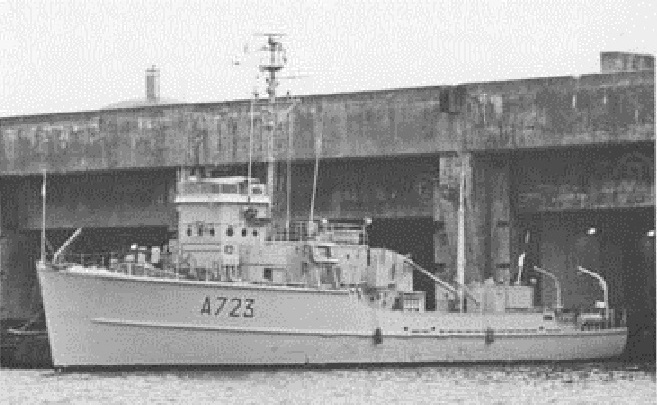
Transferred to the French Navy on November 1, 1955, she was commissioned as LISERON (M-683). By 1974, likely still in French service, the vessel was repurposed as a diving tender and reclassified A-723, marking a shift from active minesweeping duties to support operations.
By 1974, likely still in French service, the vessel was repurposed as a diving tender and reclassified A-723, marking a shift from active minesweeping duties to support operations.
Liseron was respurposed as a diving tender

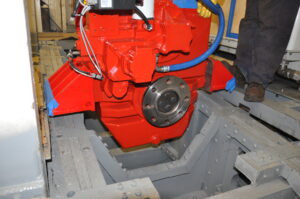
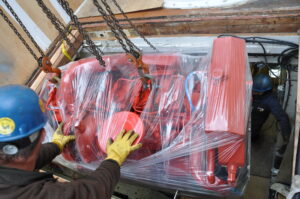
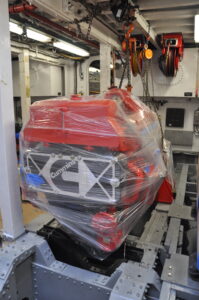
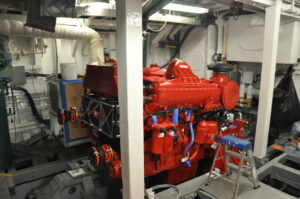
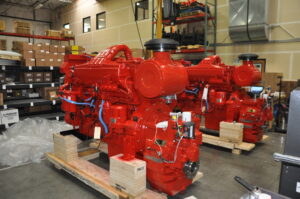
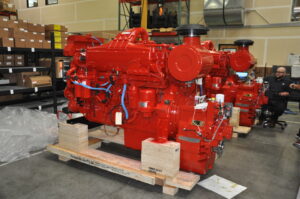
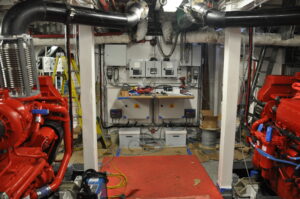
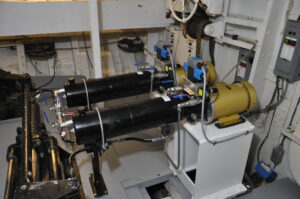
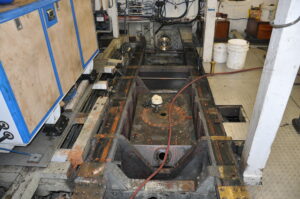
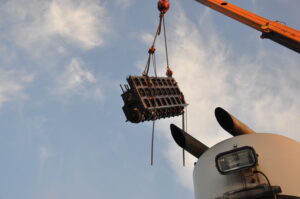
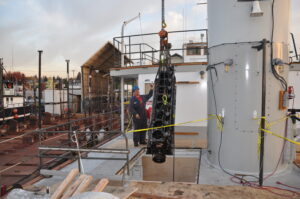
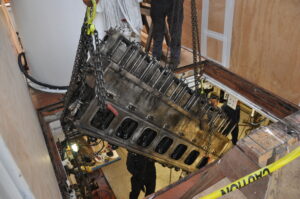
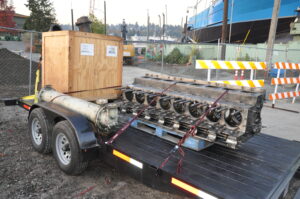
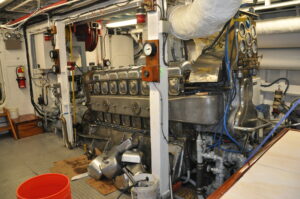
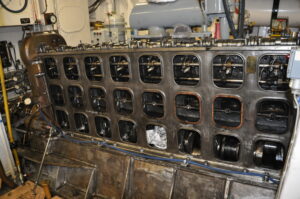
In 1988, The Boat Company of Port Orchard, Washington, acquired LISERON with the intent of restoring her for small-ship cruising in Alaska. Assigned official number 971339, she was prepared that summer for an Atlantic crossing. A SMIT tug from Rotterdam undertook the tow, though not without incident: during a layover in the English Channel, the towing gear tore free the vessel’s bronze anchor windlass, sending it to the seafloor. Temporary repairs were made in Vigo, Spain, before the month-long crossing continued. From Brest, France, LISERON was brought to Tarpon Springs, Florida, where an extensive refit began in the fall of 1988. The vessel was stripped to her oak and Purpleheart hull and deck beams, and over the course of sixteen months, a workforce that at times numbered fifty undertook her transformation. Skilled tradesmen, including welders from Duckworth Boats, contributed to the reconstruction. Care was taken to preserve original elements wherever possible, including brass fixtures and the twin 440-horsepower General Motors 8-268A diesel engines. Components sourced from other decommissioned minesweepers in France ensured historical integrity throughout the restoration.
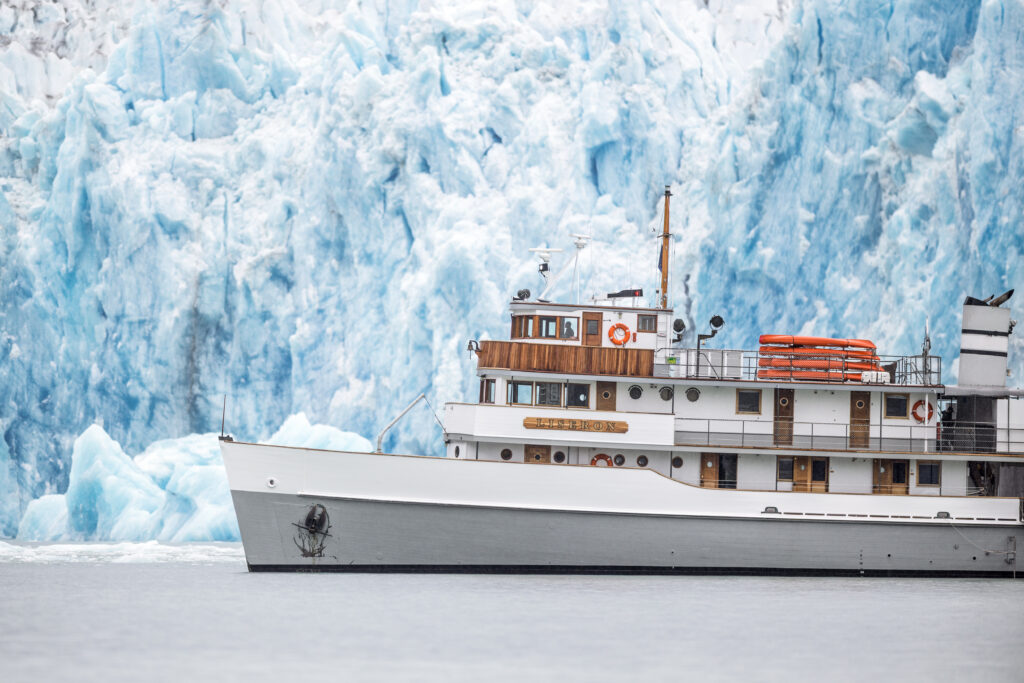
By the spring of 1993, LISERON emerged as a fully realized passenger vessel. Her accommodations were reconfigured to host twenty guests, half her original complement, within ten staterooms distributed across the main and upper decks, offering comfort while retaining the character of her naval origins. In the decades since, ongoing stewardship has preserved both her form and function. In 2011, PacFish carried out structural repairs to the stem, renewed hull caulking, and installed a bronze stem iron to reinforce the bow. Further restoration in 2016 addressed a leaking seachest and hull wear along the starboard side, replacing twenty-four fir planks and reinforcing frames with Purpleheart, often retaining original fastenings. Continued work into 2017 ensured the vessel’s long-term seaworthiness. Today, LISERON sails under the care of PacFish, alongside her sister ship MIST COVE, on behalf of the founding family of The Boat Company. Though her hailing port is Juneau, Alaska, she remains a familiar presence in the waters of the Pacific Northwest her passage marked by a history of service, adaptation, and enduring craftsmanship.

Liseron The Boat Company Small ship Alaska cruise
Liseron means Morning Glory in French

"A vessel once built for conflict now carries people toward connection with the land, with the water, and with each other."

The Boat Company Logo

– The Boat company

Restoring a Classic Vessel: Behind the Scenes

Be Part of the Story

With a legacy shaped by time and tide, Liseron offers a way of travel that feels both rare and deeply rooted. She invites you into a more meaningful way to explore Southeast Alaska.